 Virtual Colossus
The Tunny machine
Once Bill Tutte and the codebreakers had worked out the complete logic of the cipher machine, the next step was to mechanise some of the work so that enciphered messages could be read faster than by the manual methods of the time.
First, in 1942, the Post Office Research Station at Dollis Hill was asked to build a machine that duplicated the logic Tutte had worked out. Frank Morrell produced a rack of uniselectors and relays that emulated it. This machine was called “Tunny” and could be connected to a teleprinter. Once the pin settings and start positions had been worked out by hand and entered, typing in the cipher text printed out the plain text message. But the hand methods could take four to six weeks, so something faster was needed.
Heath Robinson
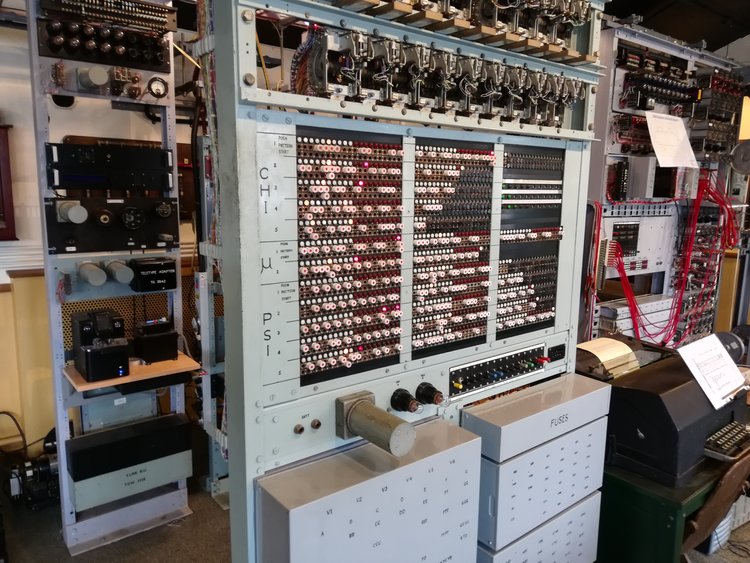
At this point a mathematician, Max Newman, thought it would be possible to automate the process of finding the settings with a machine. He approached TRE at Malvern to design an electronic machine to run the double-delta method Tutte had worked out for finding the wheel start positions. The machine was built at Dollis Hill and quickly became known as Heath Robinson, after the cartoonist and illustrator best known for drawing complicated contraptions.
Heath Robinson worked well enough to prove the idea, but it was a constant struggle to keep it running reliably. It had two paper tapes running at 1,000 characters per second, which had to be kept in step. One tape had the wheel patterns and the other the enciphered message. Each run of the tapes calculated the double delta, then the relative position of the tapes was moved on by one and the count repeated. The main problems included the tapes tearing or stretching, which meant the counts were no longer valid.
Newman went to Dollis Hill and met a brilliant electronics engineer, Tommy Flowers, in the hope that he could provide a better solution.
Colossus is born
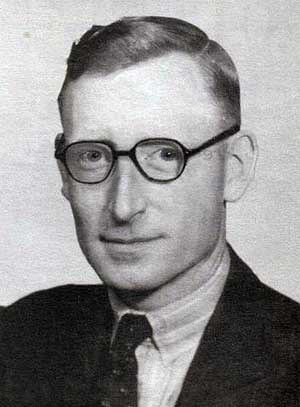
Tommy Flowers came back to Bletchley Park with a solution based on a machine that, rather than mostly using slower relays, would use a huge number of electronic valves (vacuum tubes). He proposed generating the wheel patterns electronically, which did away with one of the tapes and so solved the problem of keeping the tapes in step.
In those days valves were generally used only a few at a time, as they tended to be unreliable and needed replacing quite often. Tommy Flowers had been testing valves in his work on telephone exchange switching, and knew that valves mostly failed when being switched on and off; as long as they were kept running, they were very stable.
His solution, rather than the couple of dozen valves used by Heath Robinson, called for 1,500 valves working together. We can only imagine the looks of astonishment and disbelief from those he was trying to persuade. Bletchley Park decided not to go ahead with it.
On returning to Dollis Hill in March 1943, he gained the full backing of the director, W. G. Radley, for the project anyway. With a team of helpers, he built the first Colossus in 11 months. The Mark 1 Colossus ran for the first time at the end of 1943, and was then dismantled and reassembled at Bletchley Park in January 1944. At its first demonstration it successfully completed a test on a real enciphered message tape, and Bletchley Park soon ordered more Colossus machines.
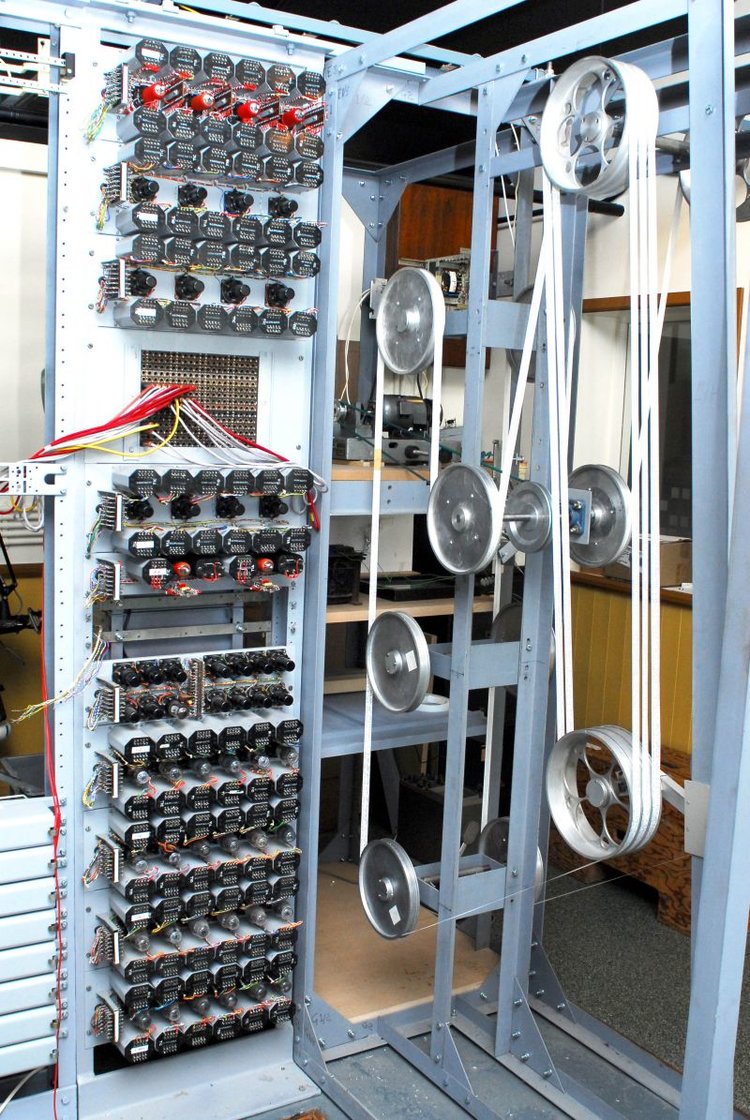
The amazing machine Tommy Flowers built was far ahead of anything else available at the time. With a huge amount of forethought, rather than building it to run just one task, he made it so the calculation could be changed using logic switches and plugs. Once installed, as new methods were thought up, Colossus could be reprogrammed to run new tests and calculations. He also used a clock pulse to keep all the control systems working together, and even a basic shift register: ideas still used in today’s computers.
Colossus reduced the time to break a Lorenz message from weeks to hours. It was up and running in time to decipher messages before D-Day, giving much-needed confirmation that Hitler had fallen for the deception that the attack would come across the Pas-de-Calais rather than in Normandy. This kept a number of divisions of troops away from the real site of the landings.
After the success of the Mark 1, Tommy Flowers already had many ideas for upgrades for the next model, and the Mark 2 Colossus was delivered in June 1944. Another 8 Colossi were built and delivered after that, amazingly at a rate of one a month, until the end of the war. The Mark 2’s main feature was that it could remember the previous five bits on each run and check against each of them, speeding it up from 5,000 characters per second to the equivalent of 25,000 per second.
The end of Colossus
After VJ Day it was all over. The order came to dismantle and destroy the Colossus machines, and all notes and drawings, to keep their existence secret. Two machines were sent to Eastcote in north London and then to GCHQ at Cheltenham, where they ran until 1960, when they too were dismantled.